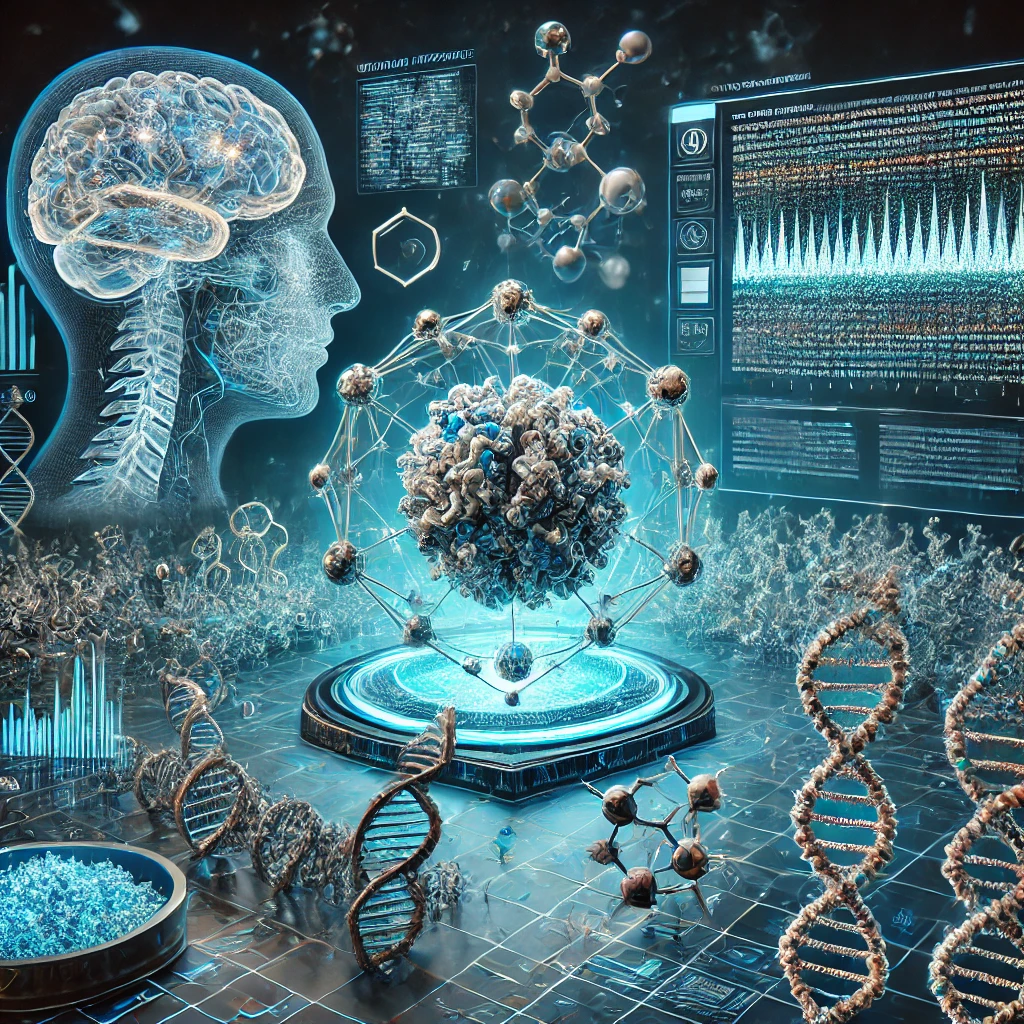
Revolutionizing Protein Folding with Artificial Intelligence: Unlocking the Future of Medicine and Drug Development
Introduction
Protein folding has always been a cornerstone of biological research, playing a vital role in understanding how life functions at the molecular level. The precise 3D structure of a protein determines its function, and any deviation can lead to severe diseases. For decades, predicting protein structures remained a formidable challenge, slowing advancements in medicine and drug development. But with the rise of artificial intelligence (AI), this complex problem has found a transformative solution. AI-powered techniques are not just accelerating research—they're revolutionizing how we approach healthcare altogether.
What is Protein Folding?
Proteins are essential molecules in our bodies, responsible for everything from building tissues to regulating metabolism. However, their functionality depends on their ability to fold into specific three-dimensional shapes. This intricate process, known as protein folding, is guided by interactions between amino acids in a protein’s sequence.
When proteins fold correctly, they perform their biological functions efficiently. However, misfolding can lead to severe disorders, such as Alzheimer’s, Parkinson’s, and cystic fibrosis. Understanding how proteins fold is thus crucial not only for basic biology but also for developing treatments for these conditions.
Challenges in Understanding Protein Folding
Why has protein folding been so hard to decipher? For one, proteins are composed of hundreds or even thousands of amino acids, each interacting in highly specific ways. Traditional methods like X-ray crystallography and nuclear magnetic resonance (NMR) spectroscopy, while reliable, are painstakingly slow and resource-intensive.
Moreover, protein misfolding and aggregation often result in diseases like prion disorders, making the need for efficient prediction models more urgent. The complexity and unpredictability of these processes created a bottleneck in research until AI arrived on the scene.
The Advent of Artificial Intelligence in Protein Folding
AI has emerged as a game-changer in the field of protein folding. By analyzing vast datasets of known protein structures, AI models can predict the folding of new proteins with remarkable accuracy. These systems use machine learning algorithms to simulate folding pathways, enabling researchers to explore structures that were previously impossible to determine.
Unlike traditional methods, AI-powered models can process data at unprecedented speeds, reducing the time needed to predict protein structures from years to mere hours. This leap has opened up new possibilities in understanding how proteins work and interact, laying the groundwork for breakthroughs in medicine.
DeepMind’s AlphaFold Breakthrough
Among the most significant achievements in this field is AlphaFold, an AI model developed by DeepMind. AlphaFold’s predictions have consistently matched experimental data with astonishing accuracy, solving protein structures that had stumped scientists for decades.
The system uses deep learning to analyze amino acid sequences, predicting how they fold into 3D structures. In 2020, AlphaFold demonstrated its potential by accurately predicting the structures of nearly all human proteins—a milestone that experts have likened to decoding the human genome.
Comparison with Previous Technologies
AlphaFold represents a quantum leap compared to older methods:
- X-ray Crystallography: Requires crystallizing proteins, a slow and labor-intensive process.
- NMR Spectroscopy: Limited to smaller proteins due to technical constraints.
- AI: Bypasses these limitations, offering faster and more scalable solutions.
Benefits of AI-Powered Protein Folding Techniques
1. Accelerating Drug Discovery
Drug development often hinges on understanding how proteins interact with potential drug molecules. By providing detailed protein structures, AI enables researchers to design targeted therapies more efficiently, shortening the timeline from concept to clinical trials.
2. Improving Disease Diagnosis and Treatment
AI-driven insights into protein misfolding mechanisms have advanced diagnostics for diseases like Huntington's and amyotrophic lateral sclerosis (ALS). These models also aid in developing personalized treatments based on individual protein profiles.
3. Advancing Biotechnology
From creating enzymes for industrial processes to engineering new biomaterials, the applications of AI-powered protein folding extend far beyond medicine.
Role in Treating Diseases
AI’s ability to predict protein structures has profound implications for treating various conditions:
- Neurodegenerative Disorders: By understanding the misfolding of proteins like tau and amyloid-beta, researchers can target these processes in Alzheimer's and Parkinson’s diseases.
- Rare Genetic Conditions: AI helps decode the effects of genetic mutations on protein structures, paving the way for novel therapies.
- Vaccine Development: Accurate protein modeling accelerates the design of vaccine candidates, as demonstrated during the COVID-19 pandemic.
Challenges and Ethical Considerations
Despite its promise, AI-driven protein folding faces hurdles:
- Data Privacy: Large-scale protein databases often require sharing sensitive biological data, raising concerns about misuse.
- Ethical Use: The potential for dual-use applications, such as bioterrorism, necessitates strict regulations.
- Error Management: Even minor inaccuracies in AI predictions can have significant consequences in drug development.
The Future of AI in Protein Folding
1. Enhancing Global Collaboration
Platforms like AlphaFold Protein Structure Database are fostering international collaboration, making protein structures accessible to researchers worldwide.
2. Integration with Quantum Computing
Quantum computers could exponentially enhance AI’s predictive capabilities, unlocking even more complex protein folding mysteries.
3. Expanding Synthetic Biology
AI can aid in designing entirely new proteins with desired properties, revolutionizing fields like agriculture, energy, and medicine.
The Road Ahead
The future of AI in protein folding is brimming with possibilities. As research advances, we can expect faster drug development cycles, improved treatments for chronic diseases, and innovative solutions to global health challenges. With continuous refinement, AI will remain at the forefront of biological research, shaping the next era of medicine.
Conclusion
The integration of artificial intelligence into protein folding research marks a transformative moment in science. By solving structures that were once insurmountable, AI is not just accelerating progress—it is redefining what’s possible in biology and medicine. The impact of this technology will resonate for decades, offering hope for better treatments and a deeper understanding of life’s molecular underpinnings.
FAQs
-
How does protein folding influence disease research?
Protein folding errors can lead to severe diseases, making their study crucial for developing targeted therapies. -
What is AlphaFold, and why is it groundbreaking?
AlphaFold is an AI model by DeepMind that predicts protein structures with unparalleled accuracy, revolutionizing biology. -
How does AI improve drug development?
By providing detailed protein structures, AI accelerates the design and testing of new drug candidates. -
What challenges exist in applying AI to protein folding?
Key challenges include data privacy, ethical considerations, and managing prediction errors. -
What are the future prospects of AI in this field?
AI promises advancements in drug discovery, personalized medicine, and synthetic biology, with even greater potential when combined with quantum computing.